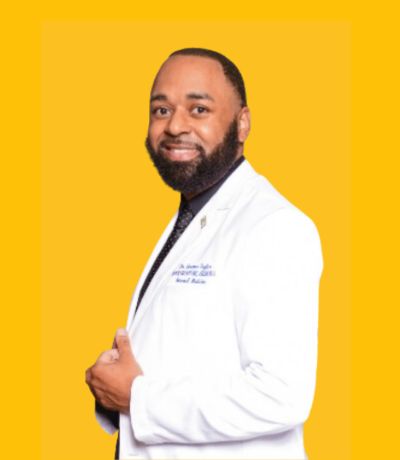
Dr. Terrence Taylor
DNP, ACNP-BC, AAHIV-S
Founder & Chief Executive Officer — CARE-INF™
Dr. Terrence Taylor
DNP, ACNP-BC, AAHIV-S
Founder & Chief Executive Officer
CARE-INF™ — Care Infrastructure for Nursing
A Nurse Leader Who Chose to Build
Dr. Terrence Taylor is the Founder and Chief Executive Officer of CARE-INF™, a professional infrastructure initiative dedicated to strengthening nursing education, clinical supervision, and workforce sustainability across the United States.
A Doctor of Nursing Practice with specialized certification in Acute Care Nursing and HIV Medicine, Dr. Taylor established CARE-INF™ in response to a critical gap in the systems supporting the nursing profession — not the skill of individual nurses, but the infrastructure around them.
His vision is grounded in a simple premise: if the profession asks nurses to care for society, then the profession must also build systems that care for nurses — structurally, not just emotionally.
"The goal is not authority. The goal is alignment." — Dr. Terrence Taylor
Founder's Commitment to Leadership Stewardship
As Founder & CEO of CARE-INF™, I strongly believe leadership carries a responsibility not only to build organizations, but also to intentionally pour into people, develop future leaders, and help create opportunities for growth, innovation, and professional advancement.
Because of this belief, CARE-INF™ is committed to building a culture rooted in leadership stewardship, executive mentorship, professionalism, reciprocal care, and intentional reinvestment into the people helping shape the future of healthcare.
As part of this commitment, both I and the CARE-INF™ Founding Presidents and Executive Leadership Team will actively participate in leadership development and mentorship opportunities made available to recurring CARE-INF™ Community members.
Through structured Founder Strategy Sessions™, Leadership Stewardship Sessions™, Executive Roundtables™, and mentorship engagement opportunities, CARE-INF™ leadership will remain intentionally accessible to help support entrepreneurs, healthcare innovators, emerging leaders, nursing professionals, students, and individuals passionate about transforming healthcare and workforce infrastructure.
The CARE-INF™ leadership model is not built solely around titles or organizational hierarchy. It is built around stewardship, service, leadership development, professionalism, accountability, and creating opportunities for others to grow.
Our expectation is that every CARE-INF™ executive leader not only helps build organizational infrastructure, but also helps develop future leaders who will continue elevating the profession long after us.
CARE-INF™ is intentionally building a national leadership ecosystem where leadership remains visible, accessible, intentional, and committed to pouring back into the profession.
- Leadership stewardship
- Executive mentorship
- Professionalism
- Reciprocal care
- Intentional reinvestment into the profession
The Opal Standard™
The Opal Standard was inspired by the founder's mother, who believed that the most meaningful work often happens quietly — strength without noise, service without expectation of recognition, endurance rooted in purpose.
The Opal Standard reflects those values. It reminds us that the strength of nursing has never been defined by attention or applause — it has always been defined by the quiet commitment of those who show up every day to care for others.
Founder's Letter to the Nursing Profession
Year One — CARE-INF™
Nursing has always been a profession built on service.
Long before the public recognized the complexity of what nurses do each day, nurses were already standing at the bedside, making clinical decisions, supporting families, and carrying the responsibility of patient safety.
That responsibility has only grown over time.
Healthcare has become more complex. The expectations placed on nurses have expanded. Schools of nursing are working tirelessly to train students for environments that demand both clinical excellence and professional resilience.
And yet, in the midst of all that progress, there is a reality many of us within the profession recognize.
Clinical training environments are under pressure.
Preceptors are carrying extraordinary workloads.
Faculty are navigating increasingly complex expectations.
Students are entering programs with great hope but sometimes encounter systems that lack the structure needed to fully support them.
These challenges are not the result of lack of effort.
If anything, they exist despite the extraordinary dedication of those within the profession.
But dedication alone cannot sustain a profession indefinitely.
Infrastructure must exist to support the people who carry the work forward.
CARE-INF™ was created in response to that reality.
CARE-INF stands for Care Infrastructure.
The idea behind it is simple.
If the profession asks nurses to care for society, then the profession must also build systems that care for nurses.
Not only emotionally.
But structurally.
CARE-INF focuses on strengthening the infrastructure surrounding nursing education and supervision. Infrastructure that improves clarity within clinical training environments. Infrastructure that supports the preceptors who guide the next generation. Infrastructure that strengthens communication between academic institutions and clinical partners.
This work is not about replacing the institutions that already serve the profession.
Schools of nursing remain the foundation of nursing education.
Health systems remain the environments where care is delivered and clinical judgment is developed.
Regulatory bodies remain responsible for protecting the safety of the public.
CARE-INF exists to support those systems, not compete with them.
It is infrastructure designed to stabilize, clarify, and align.
The Opal Standard was inspired by my mother, who believed that the most meaningful work often happens quietly. She was not someone who sought recognition. She simply believed that if something needed to be done, it should be done with discipline, humility, and care.
I have come to realize that many nurses live by that same standard.
Strength without noise.
Service without expectation of recognition.
Endurance rooted in purpose.
The Opal Standard reflects those values.
It reminds us that the strength of nursing has never been defined by attention or applause. It has always been defined by the quiet commitment of those who show up every day to care for others.
CARE-INF seeks to honor that spirit while also building the systems necessary to support the future of the profession.
Through initiatives such as the Student Clinical Snapshot™, the National Certified Preceptor Program, the National Preceptor Registry, the National Nursing Legacy Registry, and the CARE-INF Impact Fund, we hope to contribute to strengthening the infrastructure that supports nursing education and professional sustainability.
This work will not be accomplished by one person or one organization.
It will require collaboration among educators, clinicians, preceptors, health systems, and professional leaders across the country.
But I believe deeply that the nursing profession has always been capable of that kind of collaboration.
Because at its core, nursing has always been about responsibility.
Responsibility to patients.
Responsibility to communities.
Responsibility to one another.
CARE-INF simply asks that we also take responsibility for the systems that support the profession itself.
The future of nursing will not only be determined by the number of nurses we train.
It will also be determined by the strength of the infrastructure that supports them.
Thank you for the work you continue to do every day for patients, for students, and for the future of the profession.
With respect and commitment,
Dr. Terrence Taylor
Founder
CARE-INF™
The CARE-INF™ Grand Strategy
A 25-Year Vision for Nursing Infrastructure
CARE-INF™ was established with the belief that strengthening the infrastructure surrounding nursing education, supervision, and professional sustainability will play a defining role in the next chapter of the profession. The CARE-INF Grand Strategy outlines a long-term vision for how infrastructure can support the evolution of nursing over the next twenty-five years.
Long-Term Vision — By 2050
- Clinical education systems are transparent and structured
- Supervision expectations are clear and consistent
- Preceptors receive recognition and preparation for their role
- Academic institutions and healthcare systems collaborate through shared infrastructure
- Nurses are supported by systems designed to sustain them throughout their careers
Executive Founder Office Hours™
Structured executive mentorship for recurring CARE-INF™ Community members
As part of Dr. Terrence Taylor's commitment to leadership stewardship, entrepreneurship development, and healthcare innovation, recurring CARE-INF™ Community members may have access to exclusive Executive Founder Office Hours™ focused on healthcare innovation, workforce transformation, entrepreneurship, leadership development, organizational culture, and executive growth.
These sessions were intentionally created to help support individuals building ideas, organizations, initiatives, and leadership capacity designed to positively impact healthcare and the communities we serve.
Important
Membership requirement
Access to Executive Founder Office Hours™ is reserved for active recurring CARE-INF™ Community members. This preserves founder accessibility, maintains intentional engagement, creates community value, and ensures structured participation.
Session formats
Possible discussion topics
- Healthcare innovation
- Entrepreneurship
- Executive professionalism
- Workforce infrastructure
- Startup strategy
- Leadership development
- Operational scaling
- Organizational culture
- Branding
- Healthcare transformation
Founder philosophy
CARE-INF™ believes leadership should include intentional reinvestment into people, ideas, and future innovators. Through Executive Founder Office Hours™, Dr. Terrence Taylor remains committed to helping pour into leaders and entrepreneurs who are passionate about creating meaningful impact within healthcare and beyond.
These sessions are structured executive mentorship and leadership development opportunities — not open-ended consulting engagements. They do not constitute legal, financial, or clinical consulting services. Availability may be limited based on scheduling capacity.
Long-term community vision
This initiative helps establish the CARE-INF™ Community as a leadership ecosystem, innovation network, entrepreneurial community, and professional development platform — building meaningful leadership infrastructure surrounding healthcare innovation and workforce transformation.
Session scheduling and intake requests for verified recurring members will be activated in a future platform release. Until then, join or sign in to the CARE-INF™ Community to prepare for access.
The Ten Principles of Nursing Infrastructure
These principles are intended to guide collaboration among educators, clinicians, health systems, and professional leaders committed to strengthening the future of the nursing profession.
Infrastructure Must Support the Profession
A profession that asks nurses to care for society must also build systems that care for nurses. Strong infrastructure protects those who practice within it.
Transparency Protects Everyone
Clinical education must be supported by documentation structures that clearly describe student participation, supervision levels, and exposure within patient care environments. Transparency protects patients, students, faculty, and clinical partners.
Supervision Is a Professional Responsibility
Precepting is not simply a volunteer role. It is a professional responsibility that requires clarity, preparation, and support. Structured supervision doctrine strengthens both education and patient safety.
Exposure and Competency Must Be Distinguished
Clinical exposure is part of learning. Competency reflects verified readiness for independent practice. Clear distinction between the two protects educational integrity and professional accountability.
Academic and Clinical Environments Must Be Aligned
Nursing education exists at the intersection of academic institutions and clinical environments. Strong infrastructure strengthens communication, expectations, and accountability between these two worlds.
Preceptors Must Be Recognized and Supported
The clinicians who train the next generation of nurses represent one of the most important resources within the profession. Their work deserves preparation, recognition, and structural support.
Documentation Is a Form of Professional Protection
Clinical documentation is not merely administrative work. It protects patients, clinicians, institutions, and the profession itself. Clear documentation doctrine strengthens trust within healthcare systems.
The Profession Must Sustain Its Own People
Nursing cannot rely solely on individual resilience. The profession must develop systems that support nurses during moments of hardship and throughout the course of their careers.
Legacy Matters
The contributions of nurses should not disappear with time. The profession must remember those who shaped it and ensure that their work continues to inspire future generations.
Quiet Strength Defines the Profession
The CARE-INF philosophy reflects what we call The Opal Standard™ — strength grounded in humility, service without expectation of recognition, and endurance guided by purpose.
The future of nursing will be determined by the strength of its infrastructure.
Join CARE-INF™ and be part of building the systems that support the profession.
